
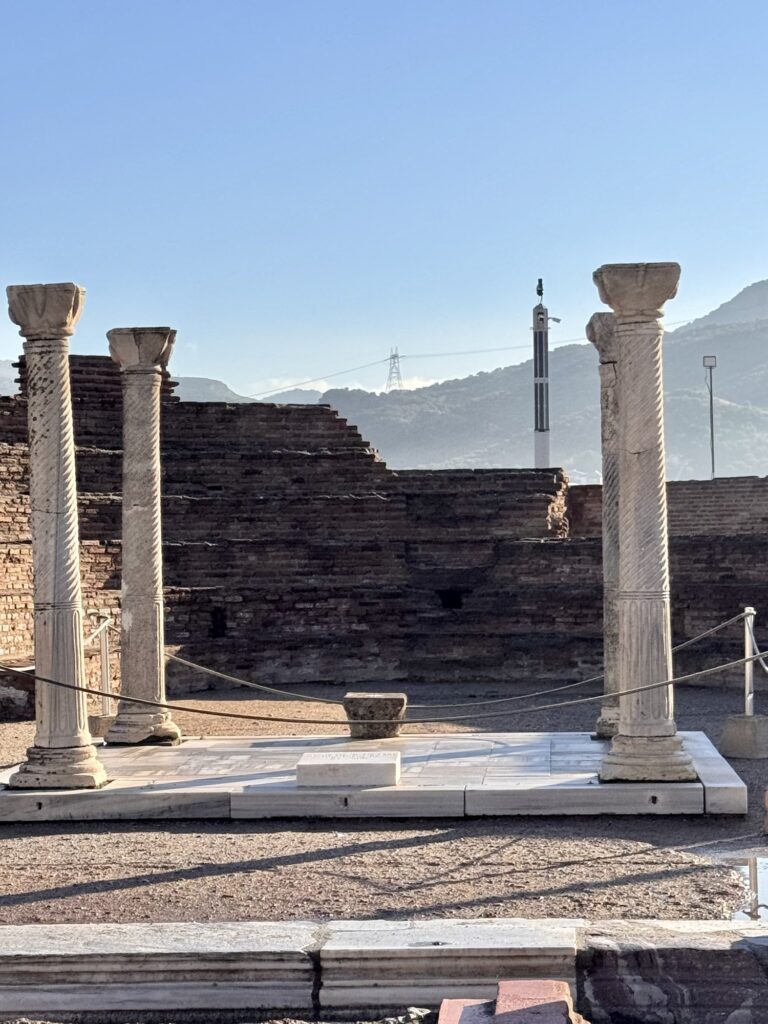
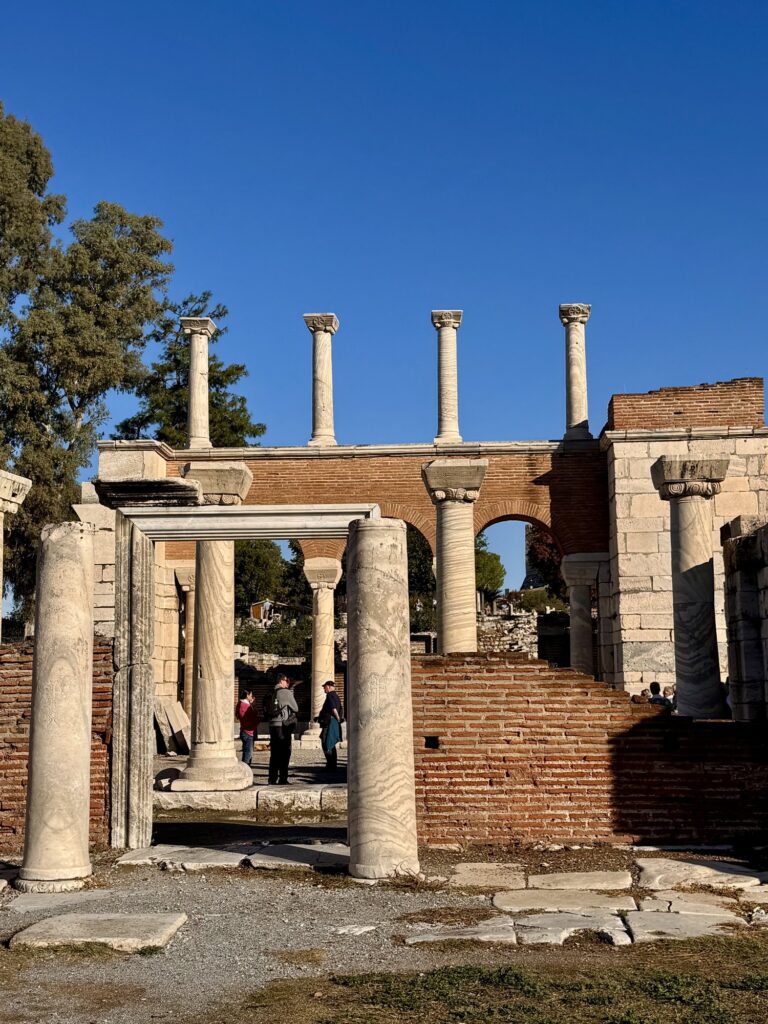
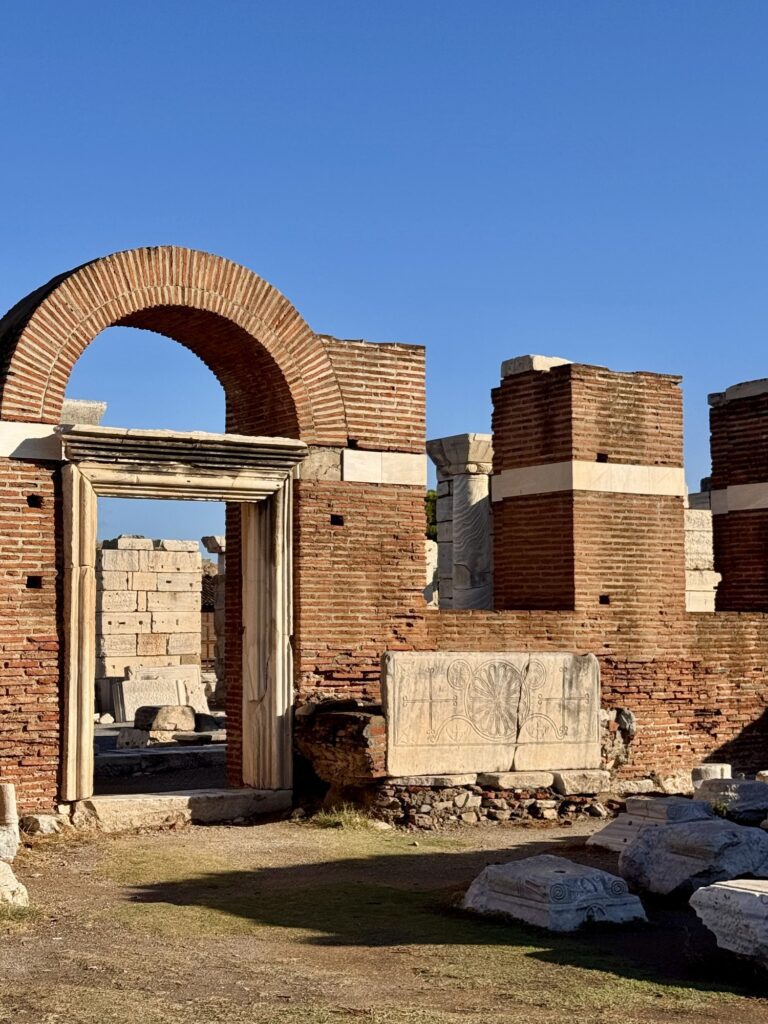
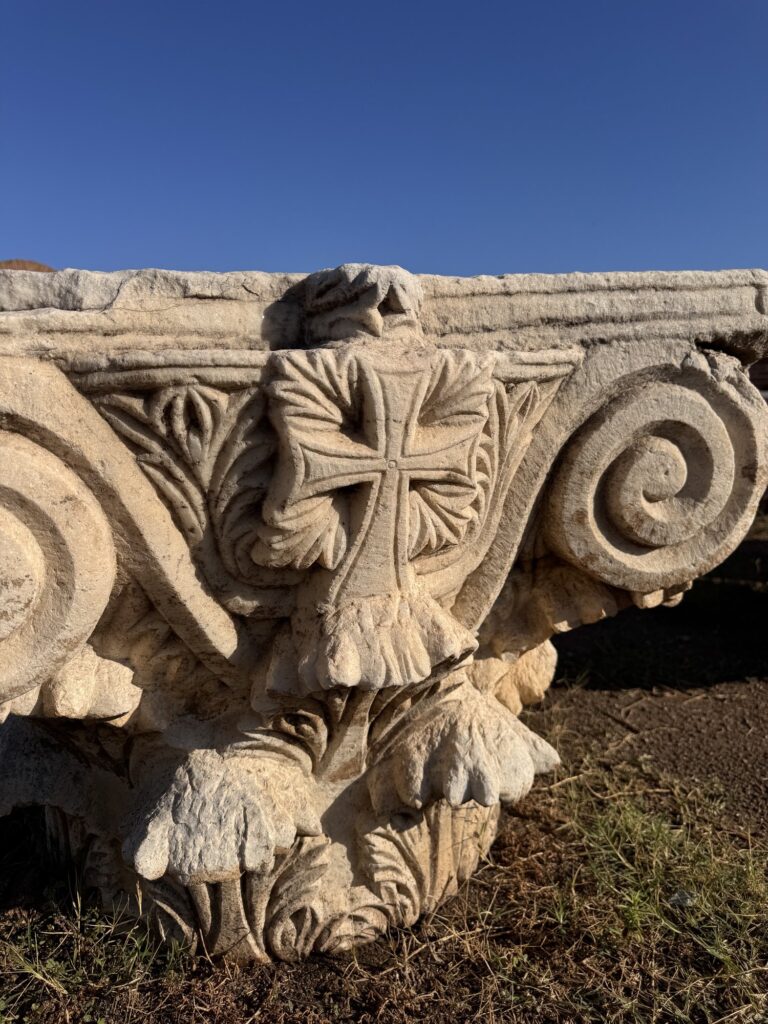
On Tuesday, October 27, our pilgrims visited Ephesus, in present-day Turkey, where St. Paul preached for more than two years (Acts 19:8-10). On the hill just outside the ancient city stand the ruins of the Basilica of St. John, built over the traditional tomb of the Apostle John, the beloved disciple, who made this region his home.
And the Word became flesh and dwelt among us, full of grace and truth; we have beheld his glory, glory as of the only Son from the Father.
John 1:14
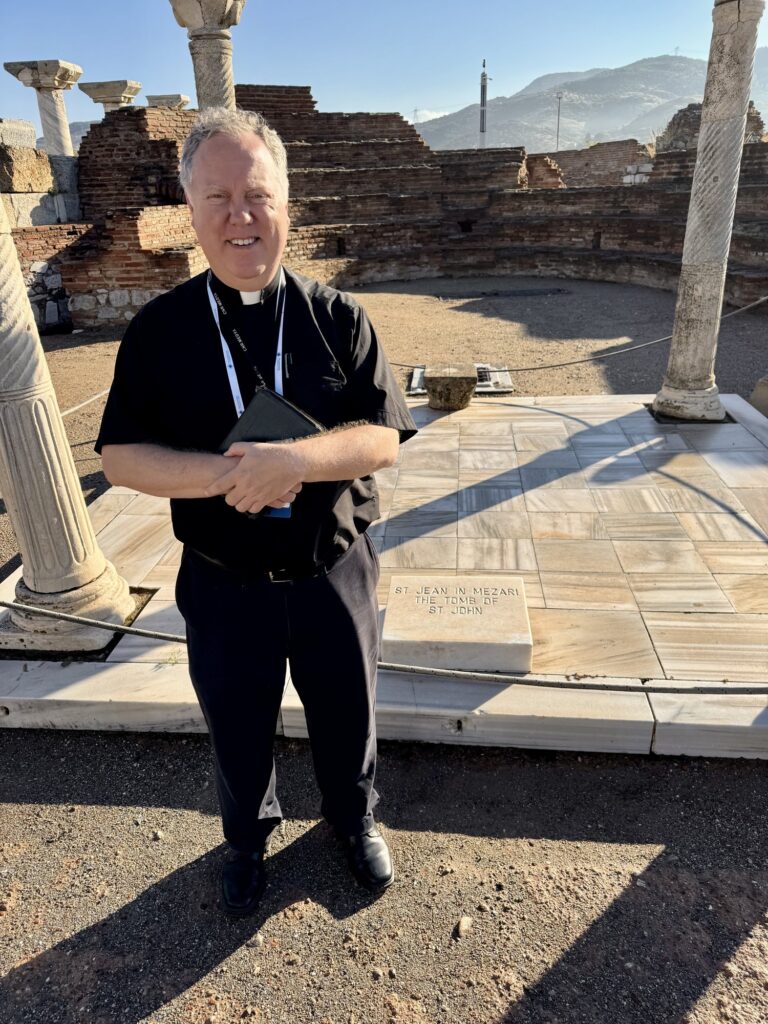
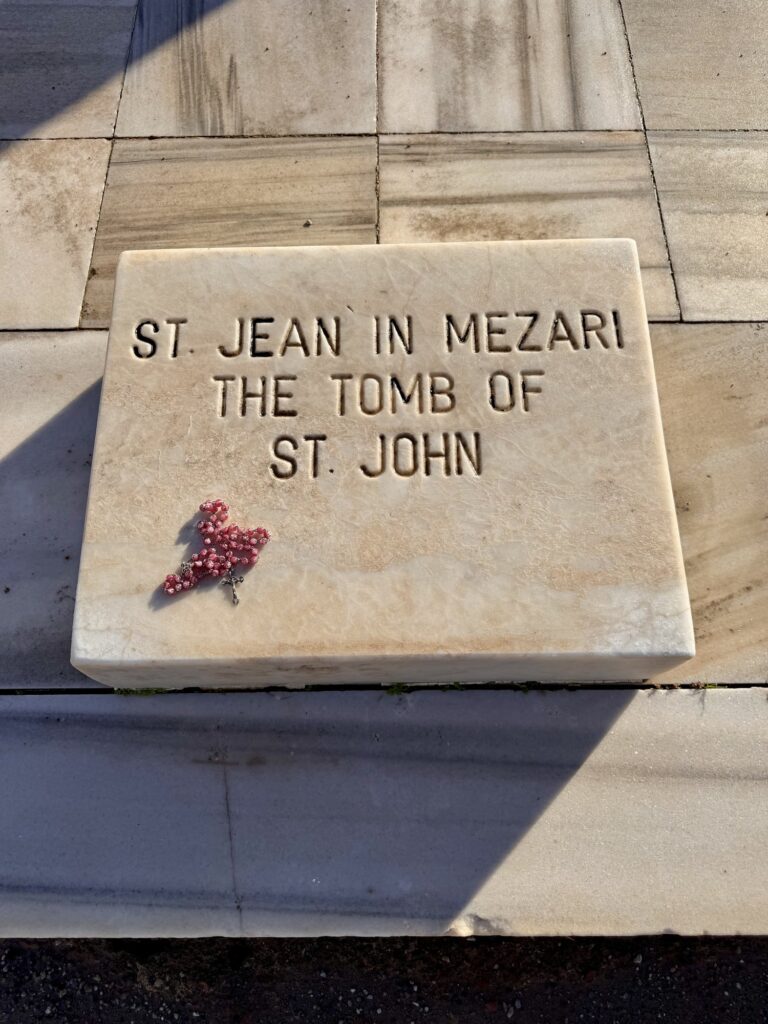
At the Tomb of St. John
We are in Turkey, just outside of Ephesus, at the Basilica of St. John the Evangelist. This is where the Apostle John, the Evangelist John, is buried. He came to Asia Minor as part of his apostolic mission to evangelize the people of this region. This was his home base. From here he went back to Jerusalem and to Rome, and he was exiled to Patmos, but this was his home base. This is where he is buried; this is where his tomb is.
St. John the Evangelist is the inspired author of the Gospel of St. John, of the First, Second and Third Letters of St. John, and of the Book of Revelation. We cannot in any way do justice to what an important figure he is in the life of the Church. We are in the footsteps of St. Paul, and we have discovered John the Evangelist.
I invite you to reread his Gospel, particularly the beginning, the prologue of St. John’s Gospel, where he proclaims so beautifully, “In the beginning was the Word, and the Word was with God, and the Word was God” (John 1:1). These beautiful words remind us of the beauty of the Incarnation.
This church was built in 380, expanded in 540, and destroyed by an earthquake in the 14th century. If it were still standing, it would be the seventh-largest cathedral in the world.
In the Agora: St. Paul in Ephesus
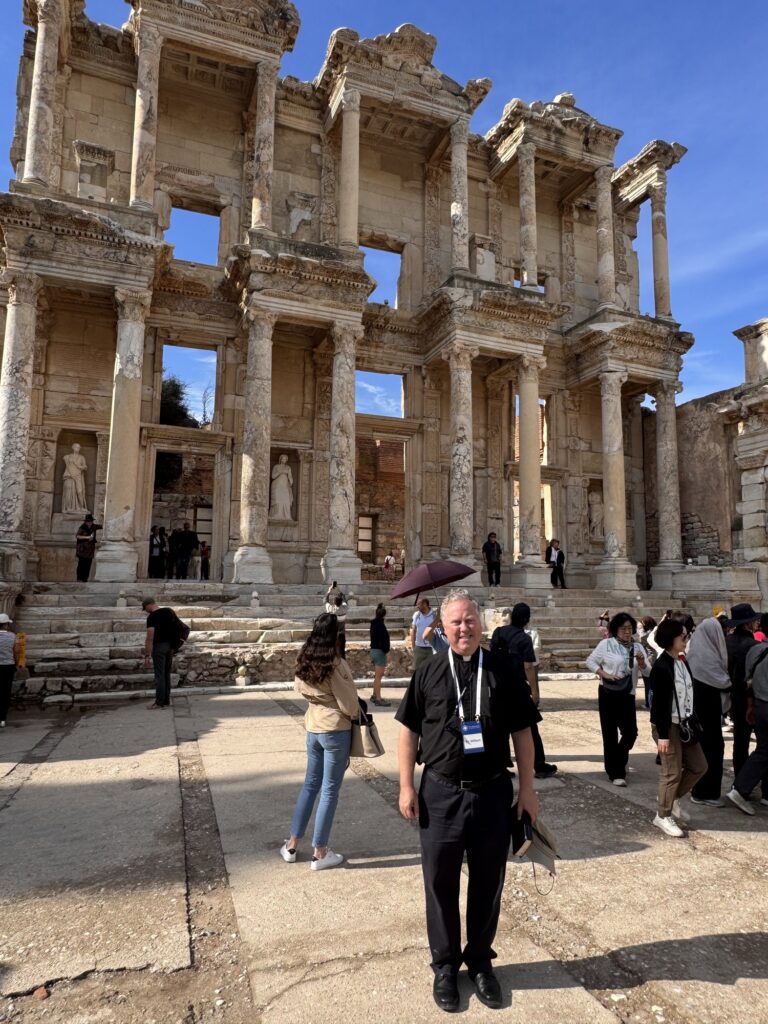
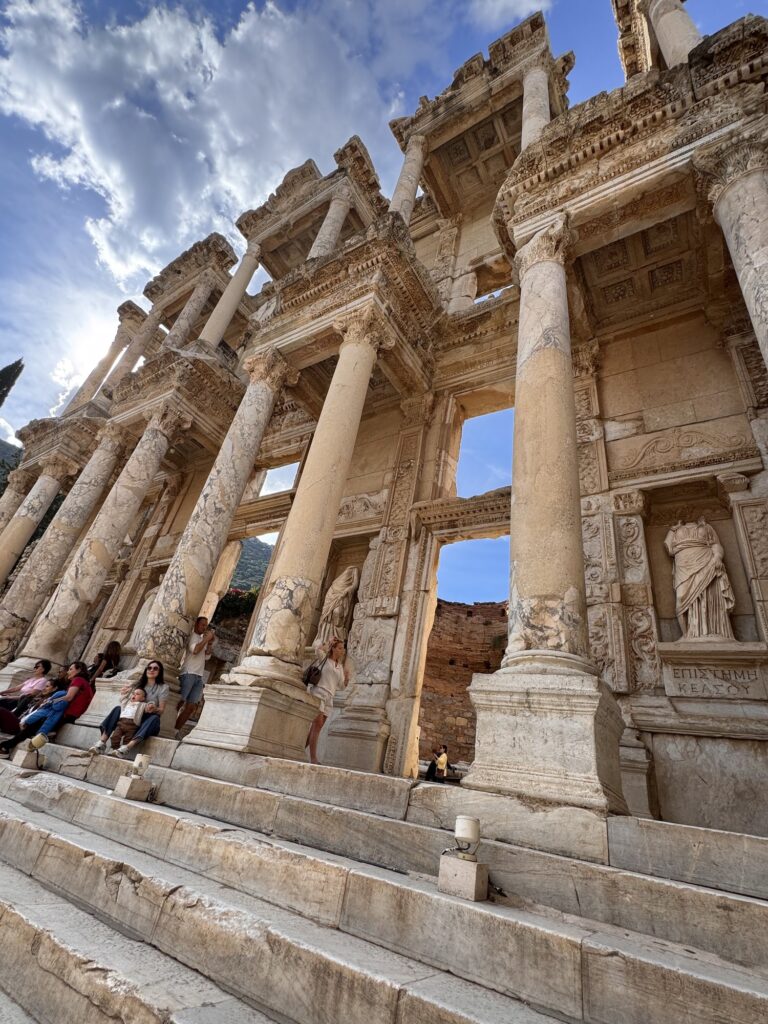
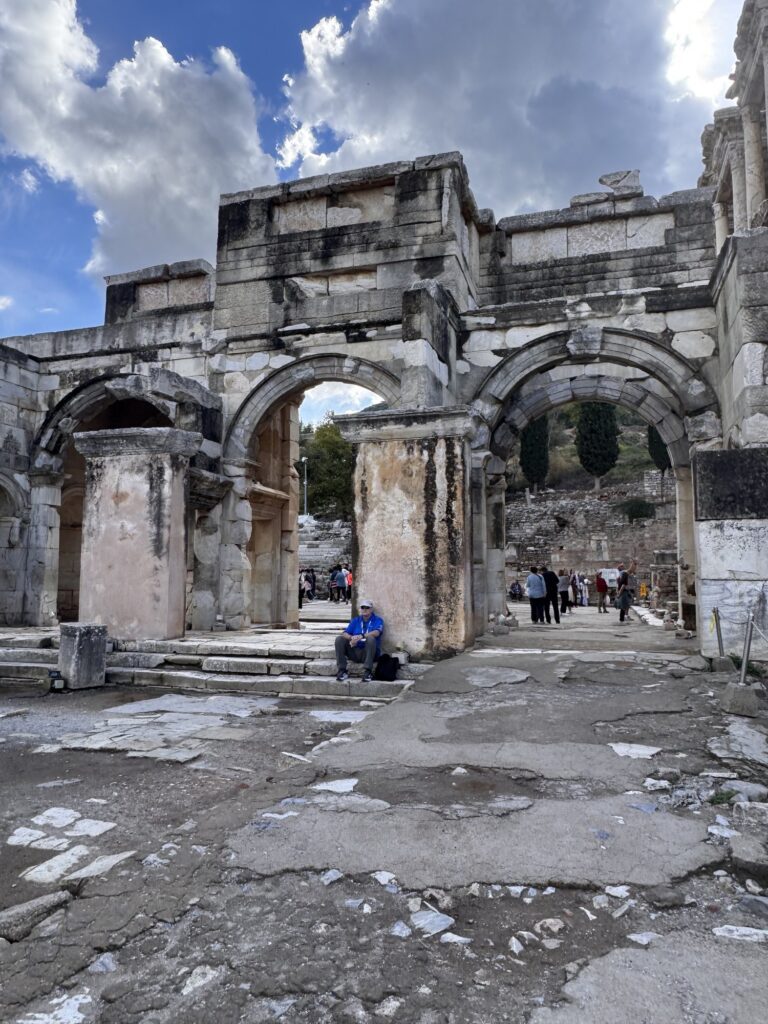
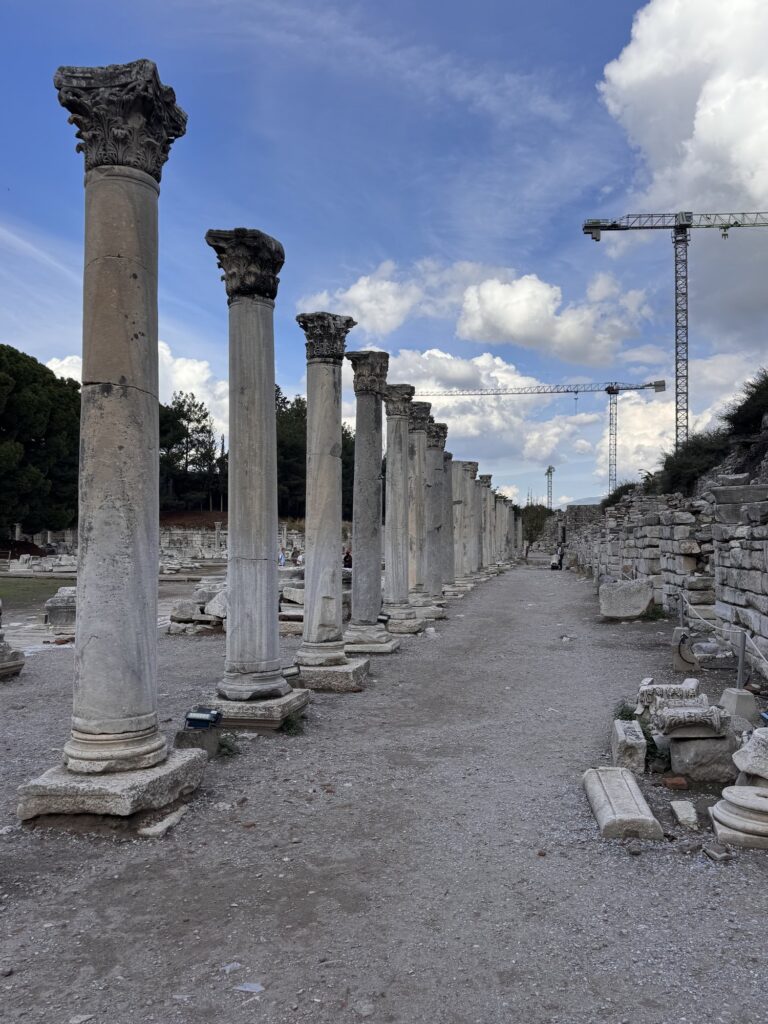
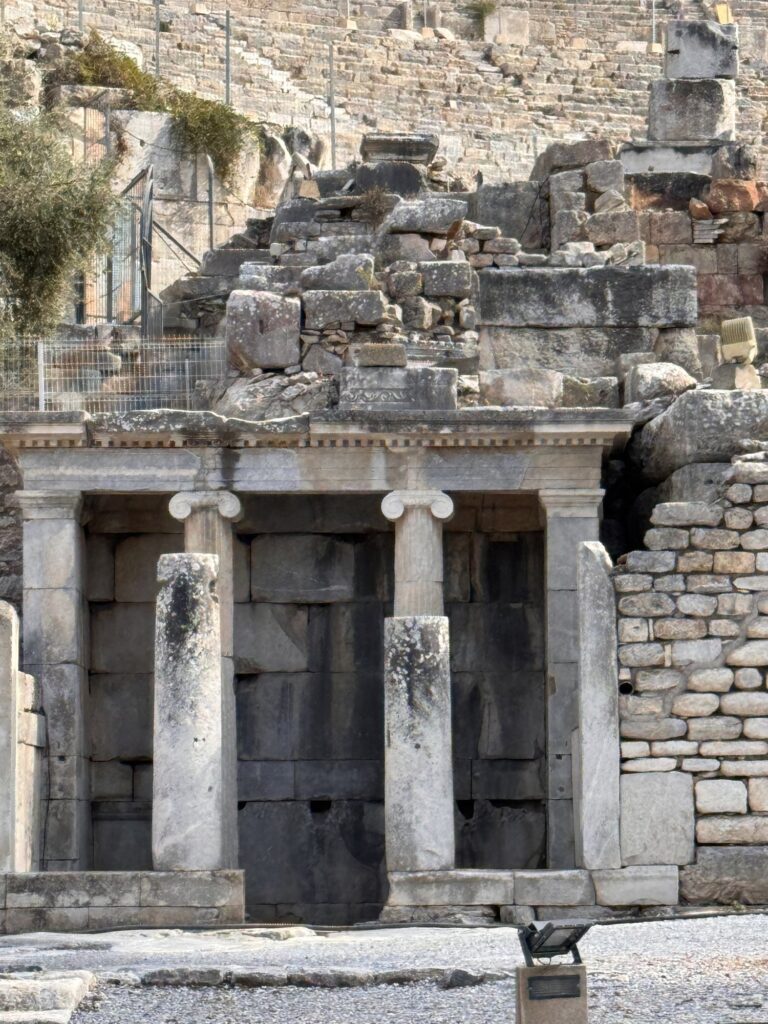
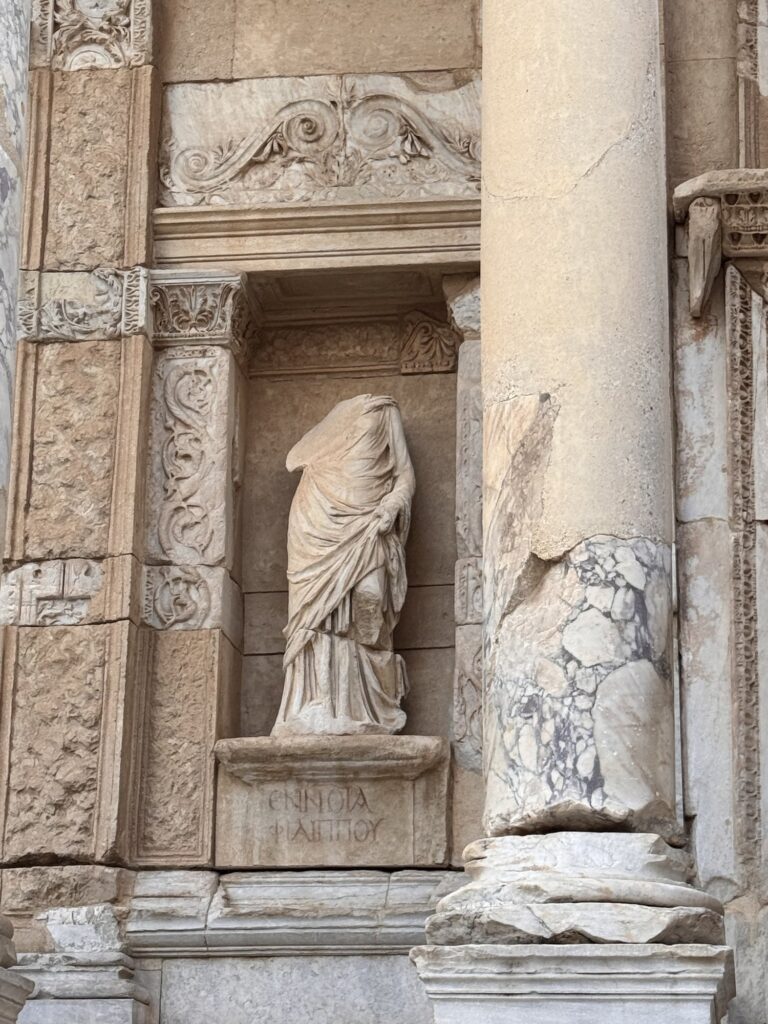
In the ancient city, the pilgrims walked the marble streets where St. Paul preached for more than two years, past the Library of Celsus to the agora, the city’s public square.
I’m here in Ephesus, this incredibly important place. We’re in the footsteps of St. Paul. St. Paul wrote a letter to the Ephesians, and from Ephesus he wrote the First and Second Letters to the Corinthians. We know that St. Paul was here twice, and on his second stay he was here up to three years. This was a major part of his ministry.
The very stones I’m standing on date back to the first century. St. Paul could have stood on these very stones. I’m here in the Agora, this public place of Ephesus. This is where he preached the Gospel.
Ephesus was an incredibly important city because the entire world was here: the spice road to India, the silk road to China, the king’s road to Babylon, and roads to Rome and to North Africa. The whole world was here. St. Paul preached the Gospel, and from here the Gospel went forth.
What an incredible witness we have in the ministry of St. Paul. We read in Acts 20:20, “I did not shrink from declaring to you anything that was profitable, and teaching you in public and from house to house.” In public, in the agora: literally here in this place. We can be inspired by the ministry of St. Paul: his zeal, his passion, his sharing the Gospel so powerfully here in Ephesus.
The same day, the pilgrims went up to the House of Mary and celebrated Mass of the Assumption there. Watch and read Fr. Wilson’s homily in Ephesus: Holy Mary, Mother of God.