
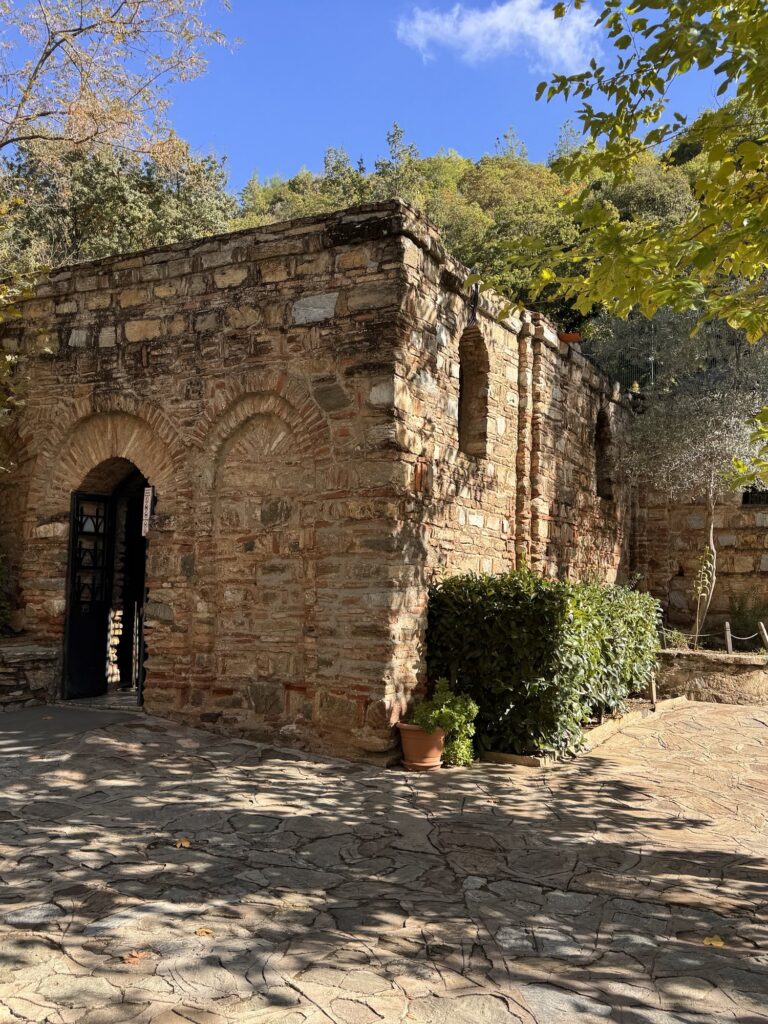
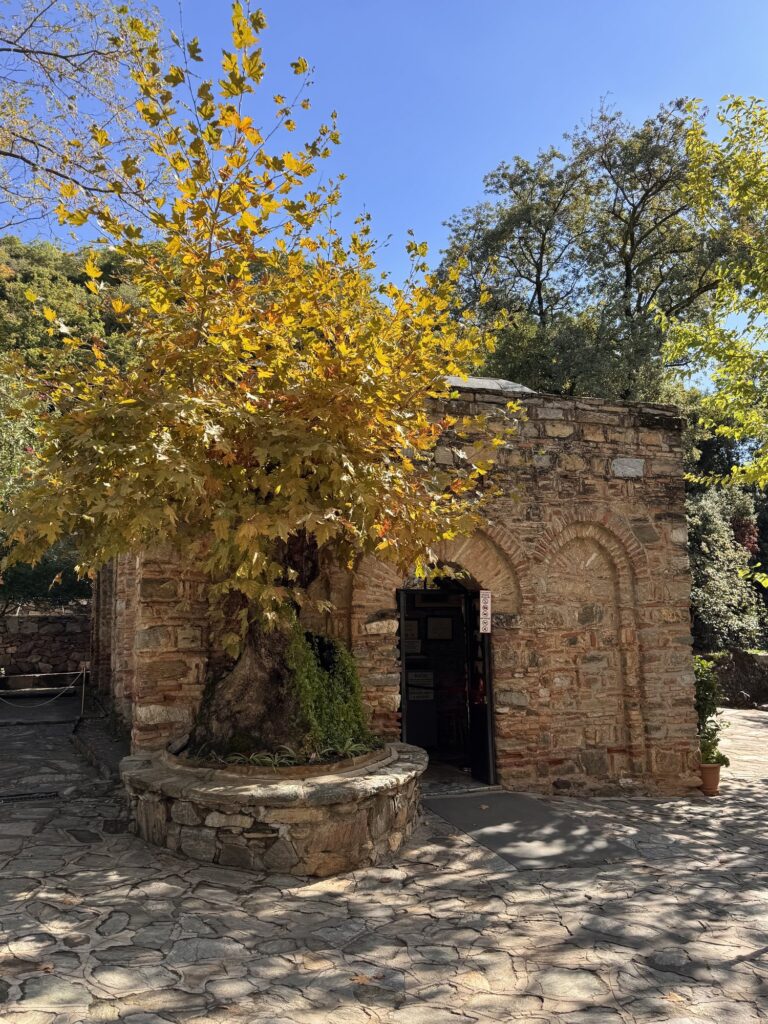
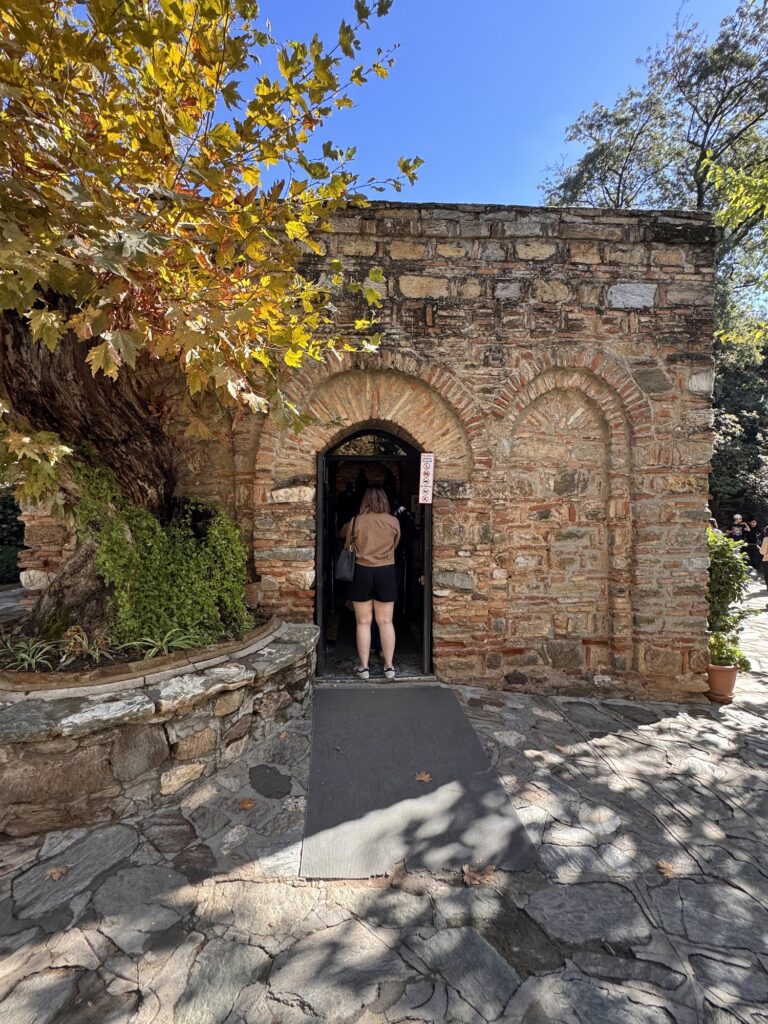
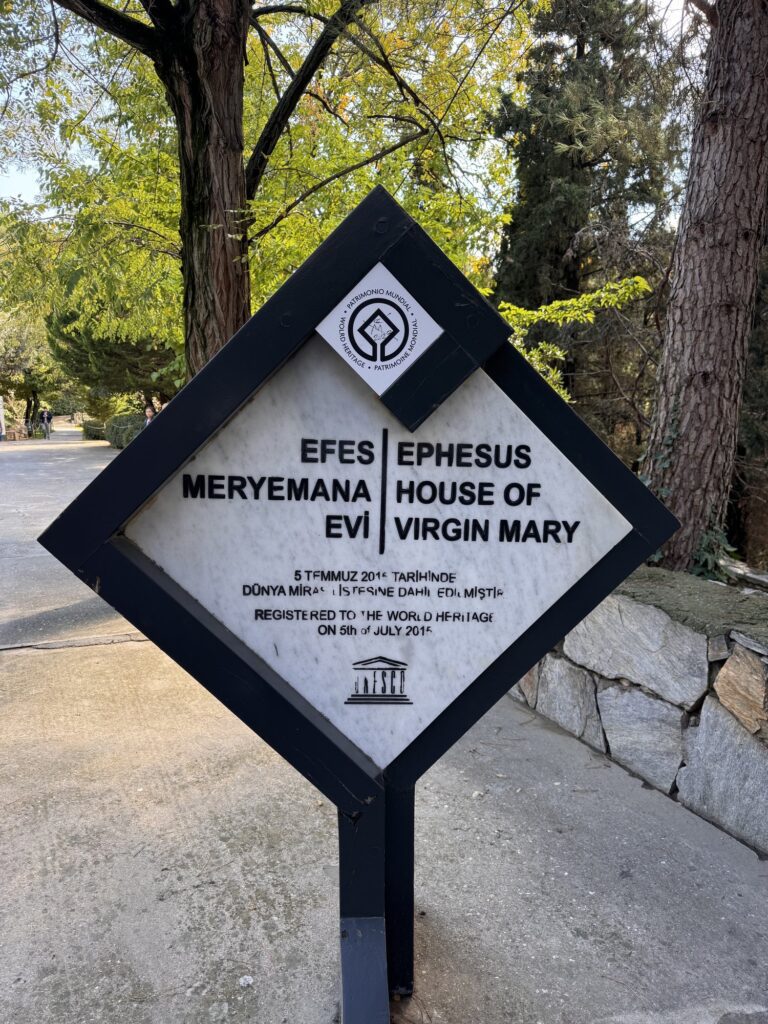
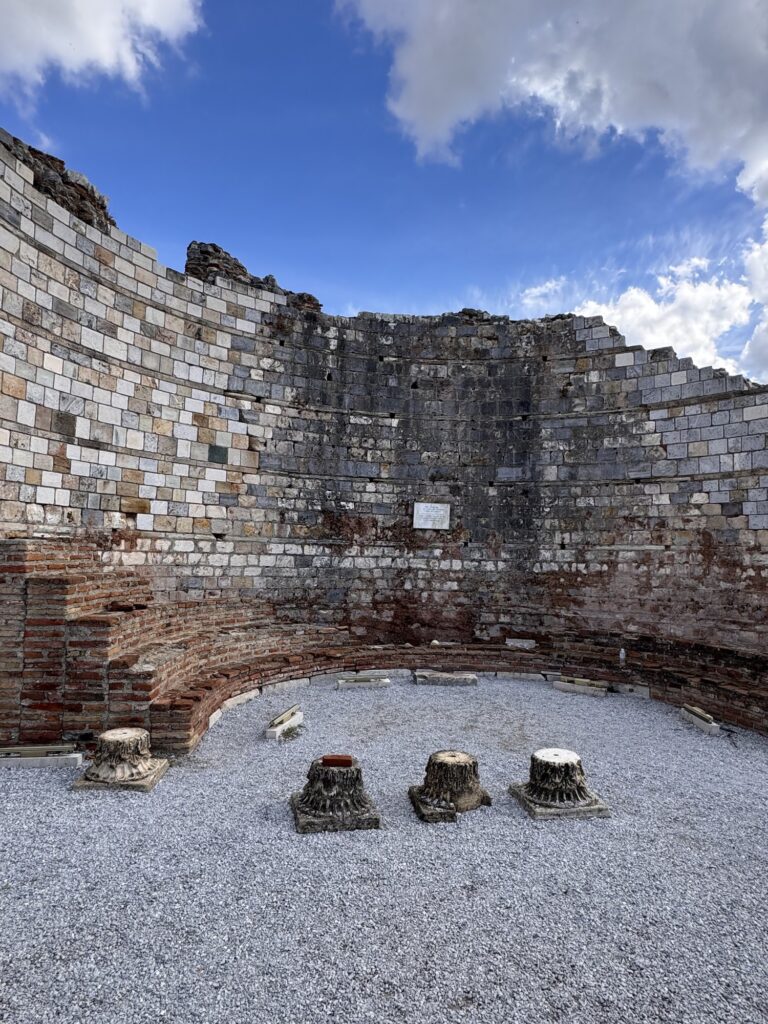
On Tuesday, October 27, our pilgrims went up to the House of Mary on the hill above Ephesus, where tradition holds that the Blessed Virgin lived with St. John, the beloved disciple, and celebrated Mass there in honor of her Assumption. In the ancient city below, they also visited the ruins of the Church of Mary, where the Council of Ephesus proclaimed her the Mother of God.
He said to the disciple, “Behold, your mother!” And from that hour the disciple took her to his own home.
John 19:27
Homily at the House of Mary
I’m not sure if overwhelming is the right word, but this is overwhelming for me. There is so much here today that we are invited to consider as we are on this pilgrimage of St. Paul. First of all, we are traveling to Ephesus, and as we have journeyed to Ephesus, we have come to the House of Mary. How many times have we prayed the mysteries of the Rosary, the Assumption of the Blessed Virgin Mary? We are here where there is a compelling and strong case, one that we have no reason to doubt, that Mary would have been assumed into heaven here.
We are coming as pilgrims on a journey, and we are invited to consider again that life is a pilgrimage. When we encounter the Assumption of the Blessed Virgin Mary, we are reminded that there is an ultimate destination to the pilgrimage of our life, and it is to be with God forever in heaven. And when we understand that truth, that fact has the power to change our lives.
We may know it at some level. We all joke that there are two certain things in life, death and taxes; perhaps we should add long homilies as a third. We joke, but to truly comprehend that there is a destination of our life beyond this life has the power to change our life here on earth. It doesn’t mean that the things of this earth become unimportant; that is not our experience as disciples. In fact, it commits us to the works of charity and justice in a new way, when we can see things in the light of eternity. It brings everything in our life into order: what matters and what does not matter.
We live in a world that continually tells us that things that don’t matter matter, and things that matter don’t matter. And so we get confused about life, about its purpose, about what matters and what doesn’t. But when we consider the ultimate destination of our life, and we understand that we want to live as disciples so that we might arrive at that destination, that has the power to bring order to every dimension of our life: the way we use our time, our relationships, our priorities, our spending, our possessions. Everything changes when we understand that we’re not here for here. We are here to be with God forever in heaven; we are truly pilgrims passing through here for a time.
And we can live this way because we know that death has been conquered. We know that through the Resurrection of Jesus Christ there is this assurance of life after death, and that changes things for us as disciples.
In our journey of faith, Mary has a uniquely important place. And so we stop here not simply to honor the fact that she was assumed into heaven, body and soul, at the conclusion of her earthly life. Here, just yards away from her house, we are invited to live with her for a moment. We know that Jesus entrusted Mary to John, the beloved disciple, when he was on the cross, and we know that by tradition John came here; there are many historical arguments for why we believe that. So let us take a moment to be with Mary.
When the fathers of the Second Vatican Council were debating a teaching on Mary, some said, “Let’s have a special document just about Mary.” Others said, “No, let’s include Mary in a document about the Church.” Those who proposed that ultimately prevailed. And so in that very special document of the Second Vatican Council, Lumen Gentium, the document on the Church, we find in the eighth and final chapter an entire chapter devoted to Mary. That is very significant for us, because as members of the Church, we can look to her in a special way.
Recently, Pope Leo XIV has given a teaching on that chapter, as he is slowly reminding us about those documents, and he gave us an easy way to think about Mary’s role: three M’s.
First, she is a member of the Church. Just stop and consider that: part of being baptized into the Church is that we share membership in the Church with the Blessed Virgin Mary. She is a member with us, of course a member par excellence, and she teaches us what it means to be a member.
And so, easily, the second M: a model. She is the model disciple. If we want to know what it means to follow her Son Jesus, the best place to look is Mary. She teaches us what it means to be a disciple. And she is a model also in the sense that if we want to know what the Church is, she exemplifies the Church most perfectly. She is a model of the Church.
And the third M, this image of mother: she is the Mother of the Church. We’re here just outside of Ephesus, where the early bishops of the Church gathered at the Council of Ephesus in 431 to deal with a major problem, a question about Jesus: the heresy being taught by a bishop named Nestorius, who claimed that Mary was the mother of Jesus but not the Mother of God. They knew this was wrong, and they gathered and re-articulated our faith in Jesus Christ as a divine person with two natures, human and divine, united such that if Mary is the mother of Jesus, she is the Mother of God, because we cannot separate his humanity and his divinity.
The way they chose to affirm this teaching on our Lord and Savior Jesus Christ was to affirm something about Mary. They said she is Theotokos, God-bearer. As we say, she is Mater Dei, Mother of God. And so this also tells us something about the importance of Mary: if we want to understand her Son Jesus, we must understand her. A proper understanding of her Son will always lead us to a great devotion to her, and a proper devotion to her will always lead us to a proper relationship with her divine Son.
She is the member of the Church. She is the model of discipleship, the model of what it means to be the Church. She is the Mother of the Church, because she is the Mother of God.
In this moment of grace, this moment of pilgrimage, I invite you to have great confidence in her maternal intercession. As we celebrate her Assumption today, we seek her intercession, that we would be strengthened on this, our journey of life; that we would never get so distracted by the things of the world that we forget that we are truly pilgrims passing through, with an eternal destination beyond this life. May that help order everything we do while we are here on the way.
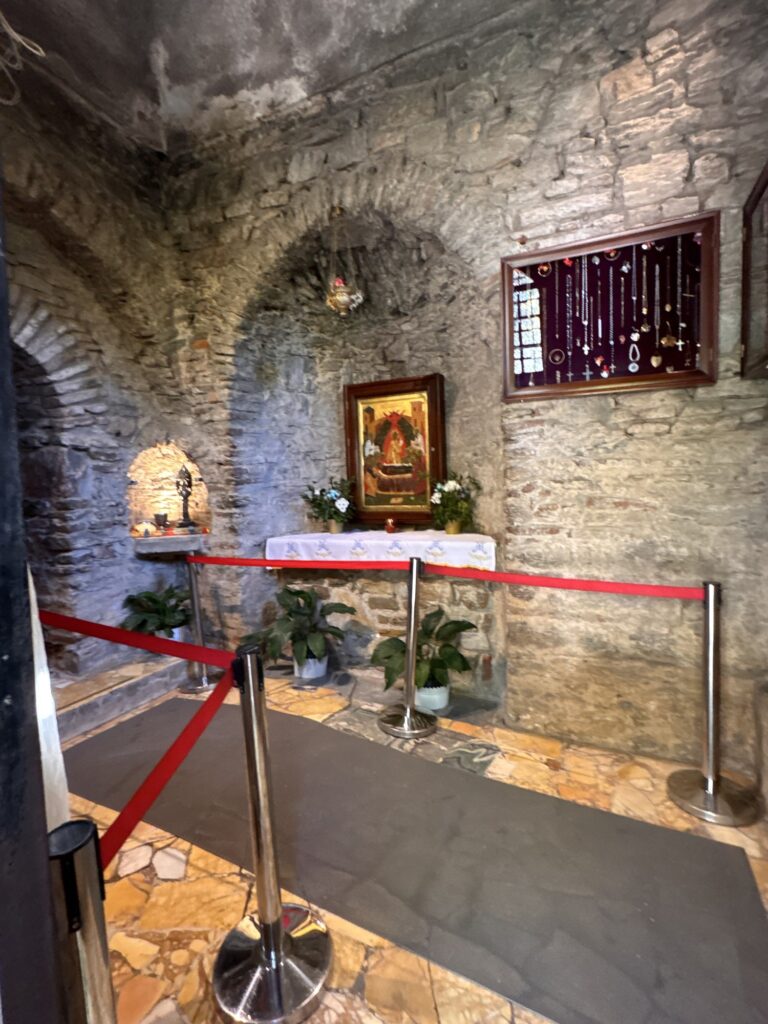
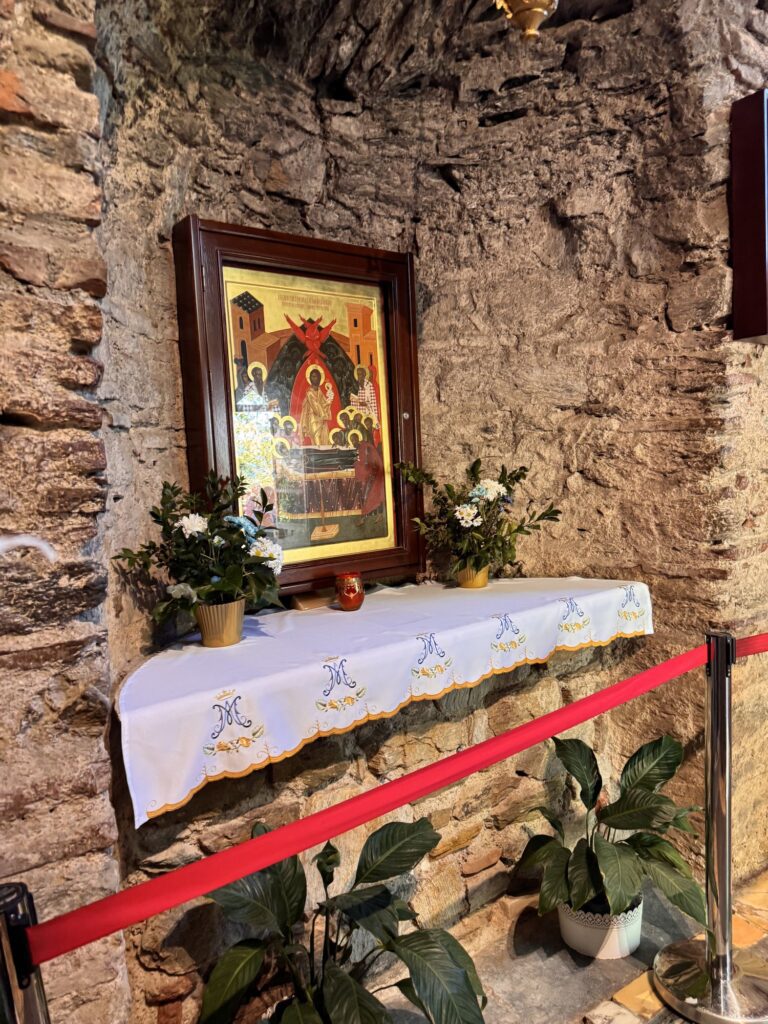
At the Church of Mary: The Council of Ephesus
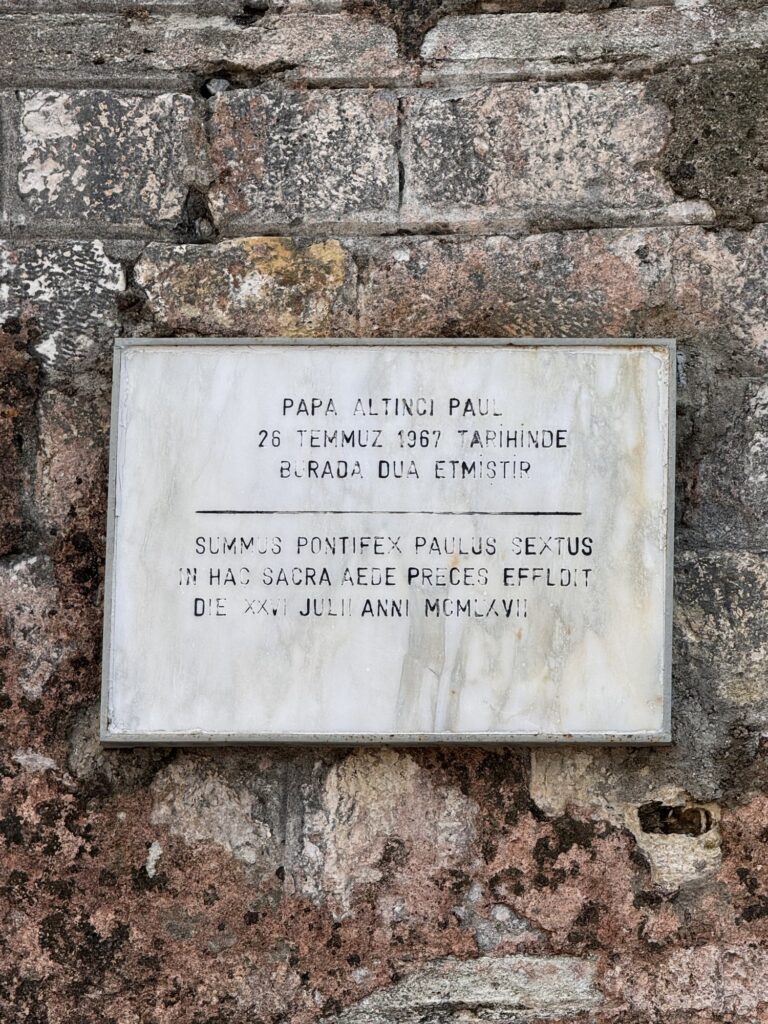
In ancient Ephesus itself, the pilgrims also visited the ruins of the Church of Mary, where the Council of Ephesus met in 431 and proclaimed Mary Theotokos, the Mother of God.
I’m here in Ephesus at this incredibly important place. Behind me are the ruins of this ancient basilica in honor of the Blessed Virgin Mary. It was here in 431 that bishops from all over the world gathered for the Third Ecumenical Council.
They were wrestling with a really important question, a question about Jesus: about understanding him properly, about understanding the relationship between his humanity and his divinity. There were some who said that Mary is the mother of Christ, but not the Mother of God. And so they gathered here to say: No, Mary is Theotokos. She is the Mother of God, because the one she gave birth to is true God and true man, and his humanity and divinity are united in his person.
This was an incredibly important moment to clarify the truth about Jesus, and they did that by affirming an important truth about Mary. Every January 1, we celebrate the feast of Mary, Mother of God. When we pray the Hail Mary, we pray, “Holy Mary, Mother of God.” The creature gave birth to the Creator. The one she gave birth to, our Savior, is true God and true man.
Holy Mary, Mother of God, pray for us.
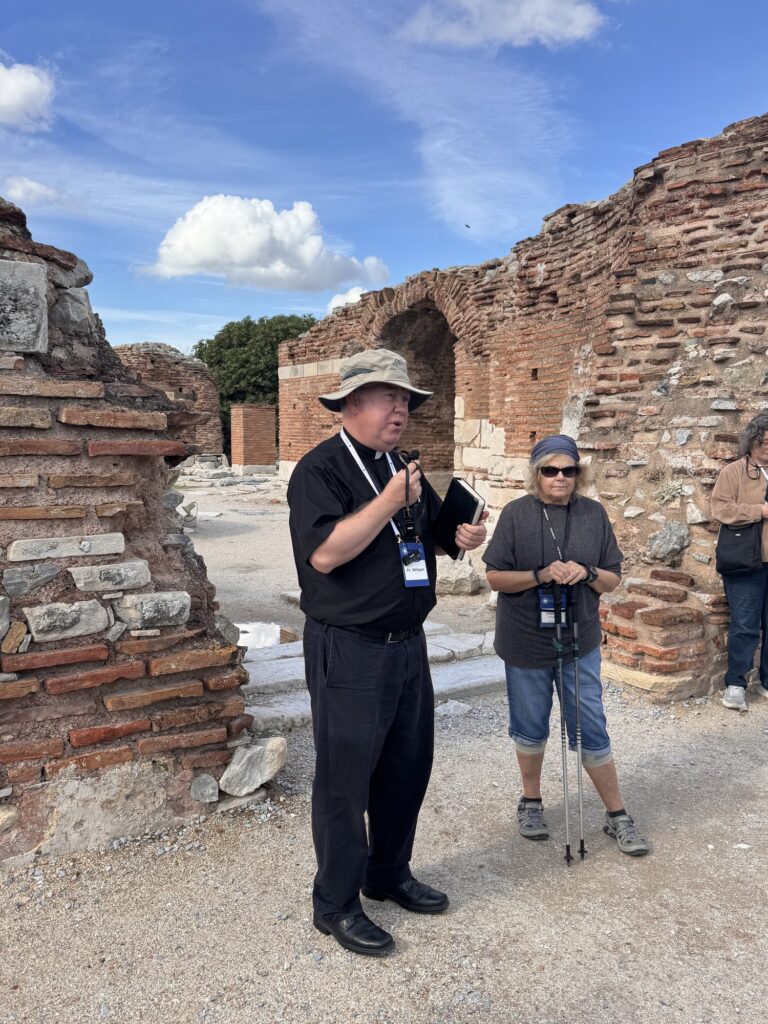
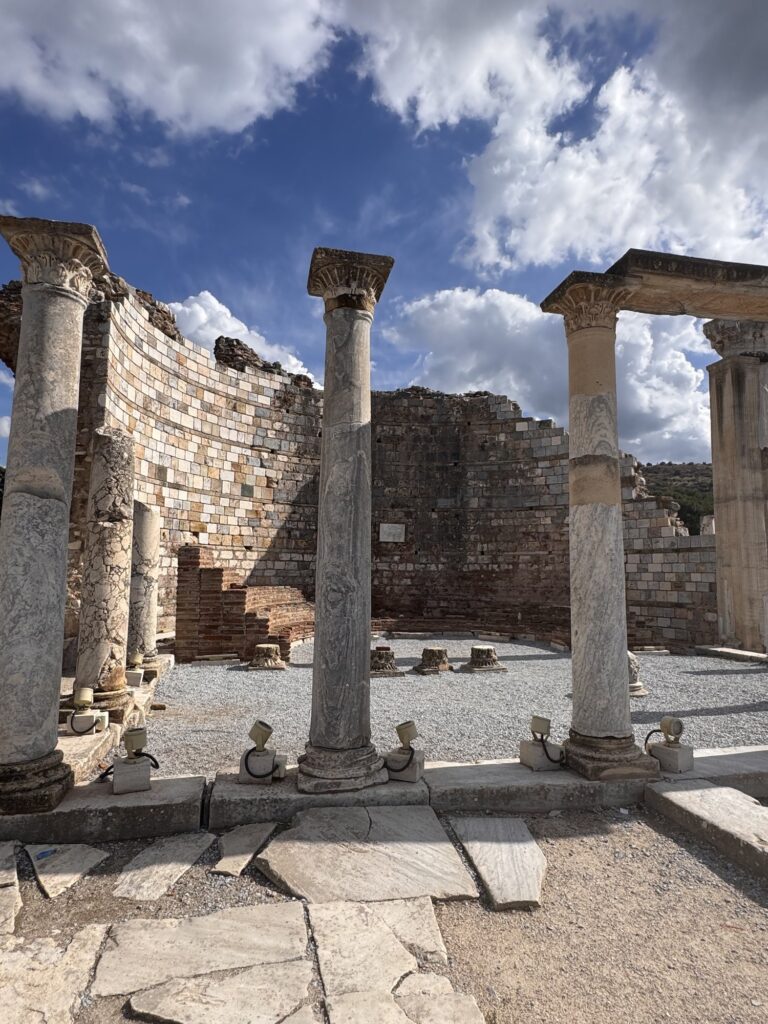
Earlier in Ephesus, Fr. Wilson spoke at the tomb of St. John and in the Agora where St. Paul preached: Ephesus: In the Beginning Was the Word.