
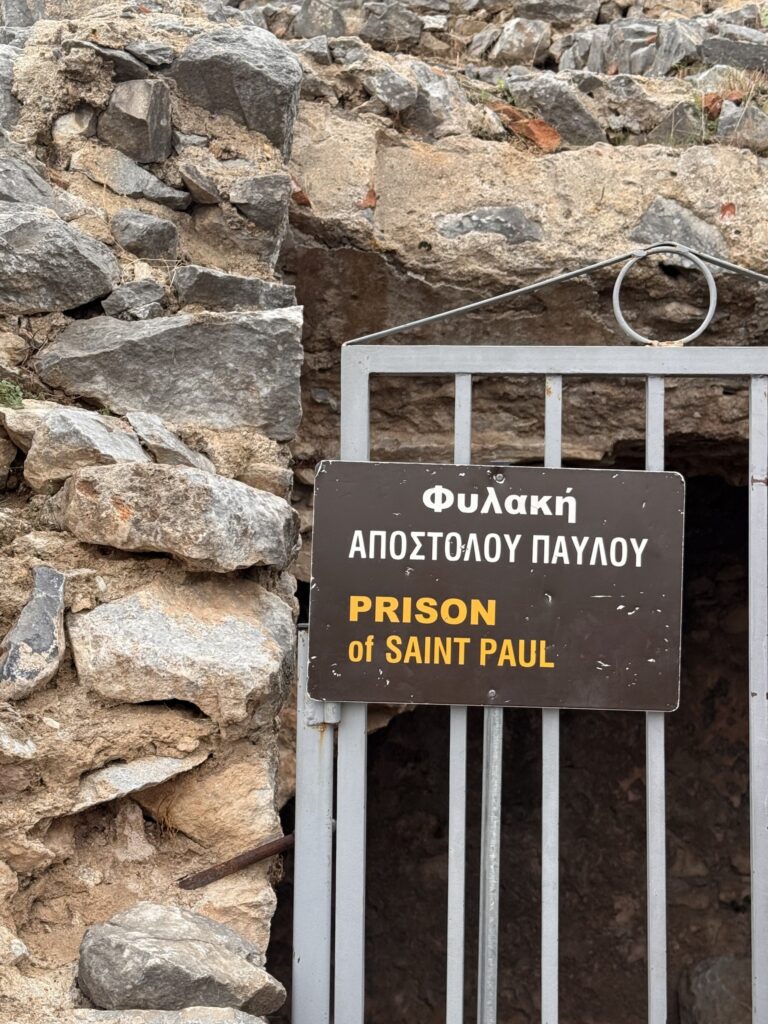
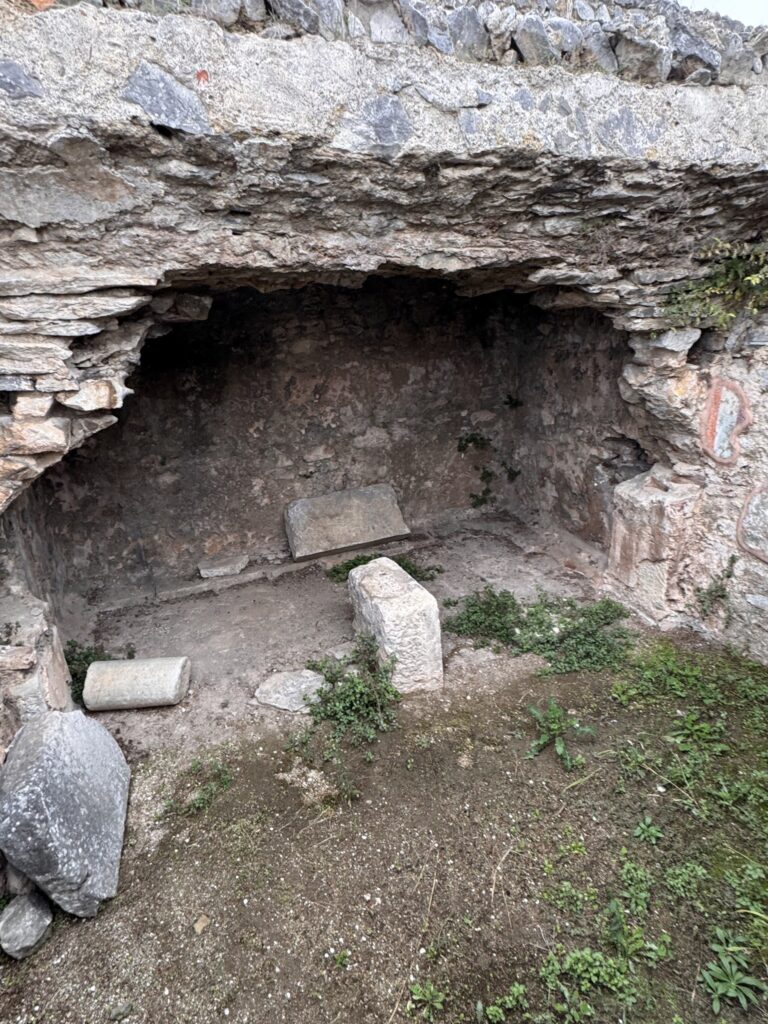
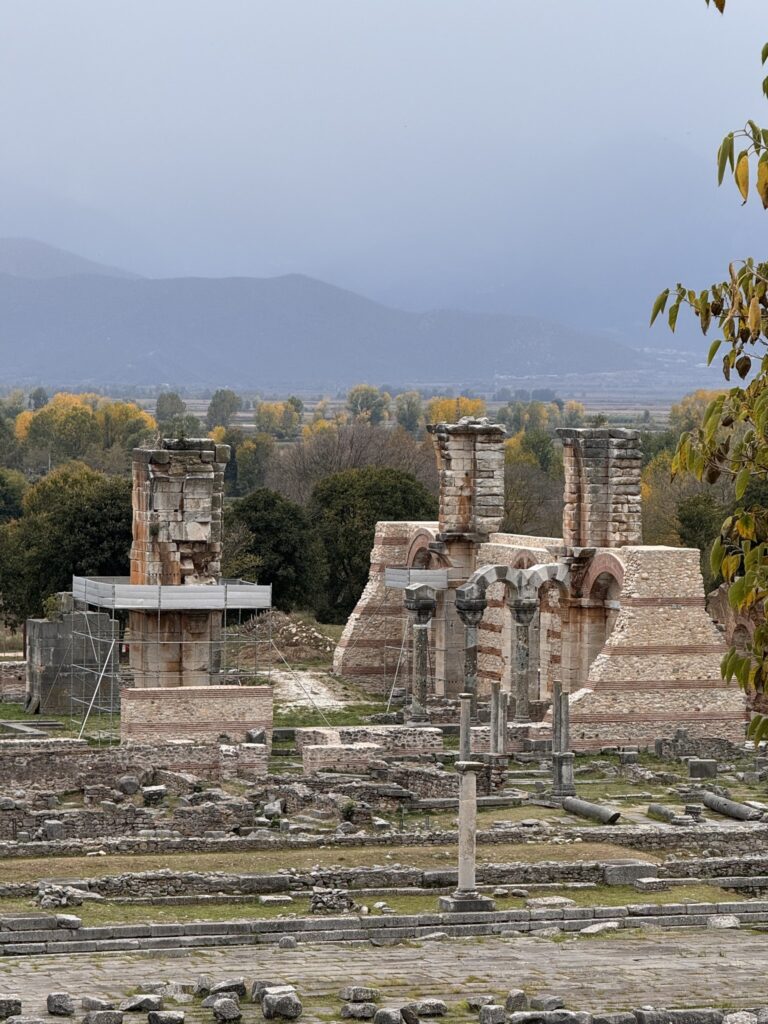
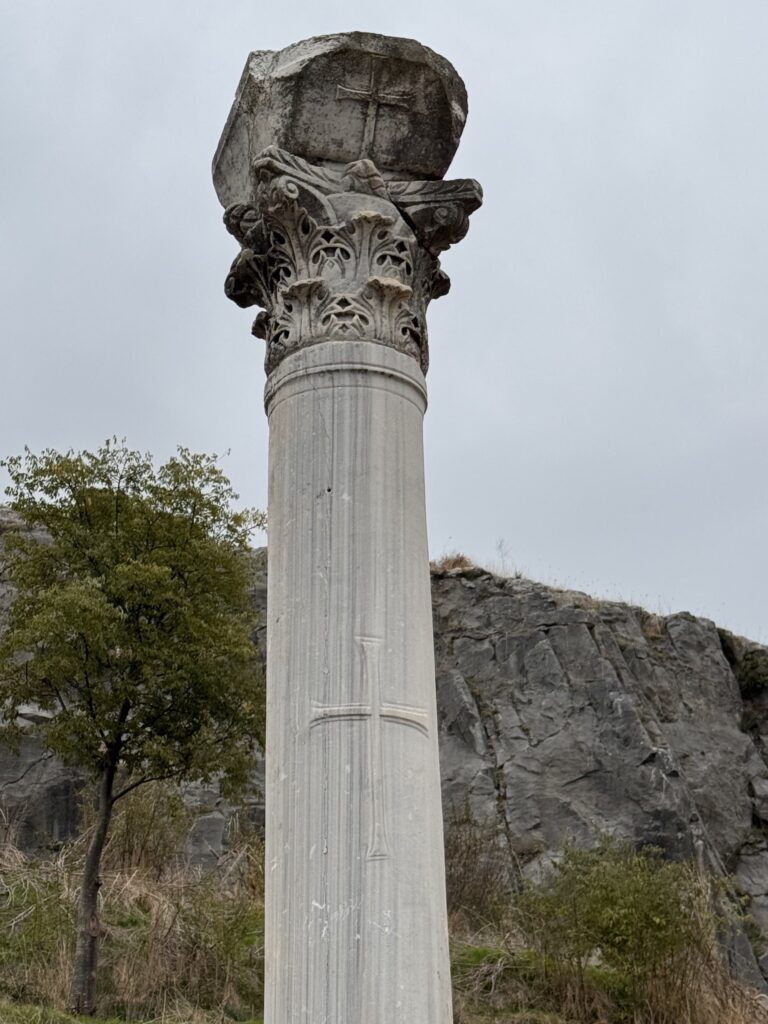
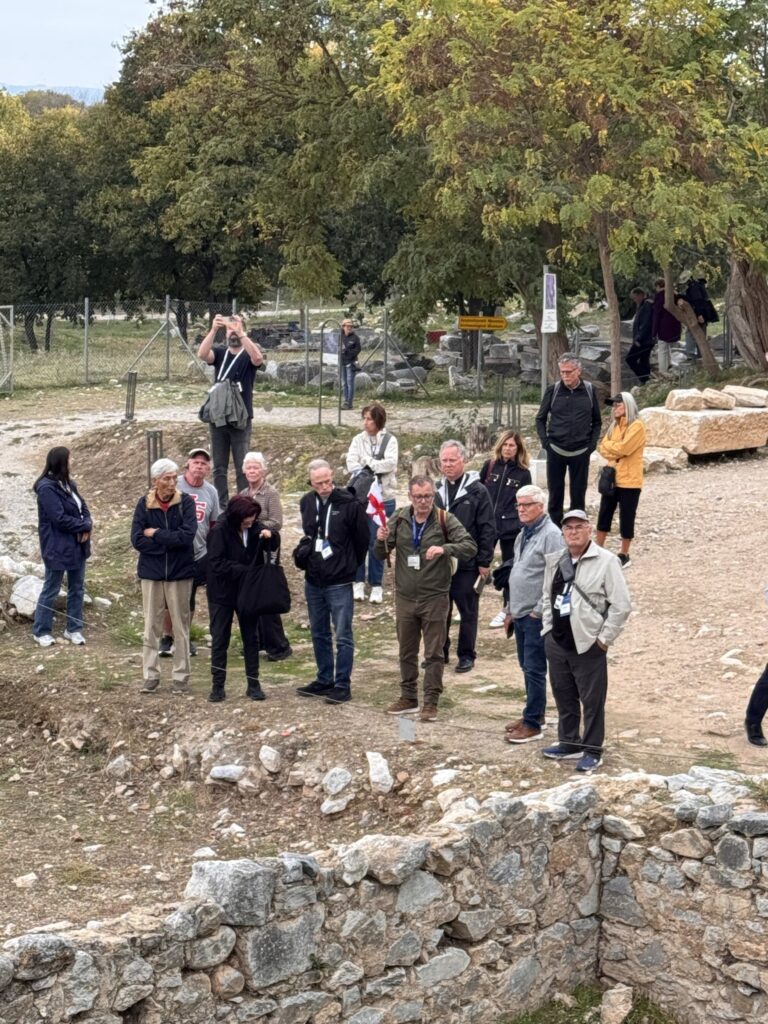
Later on Friday, October 30, our pilgrims walked among the ruins of ancient Philippi, a Roman colony on the great east-west highway, the Via Egnatia. A small crypt among the ruins has long been honored as the prison where Paul and Silas were held, and where, after an earthquake opened the doors at midnight, their jailer and his whole household were baptized (Acts 16:16-34).
But about midnight Paul and Silas were praying and singing hymns to God, and the prisoners were listening to them, and suddenly there was a great earthquake, so that the foundations of the prison were shaken; and immediately all the doors were opened and every one’s fetters were unfastened.
Acts 16:25-26
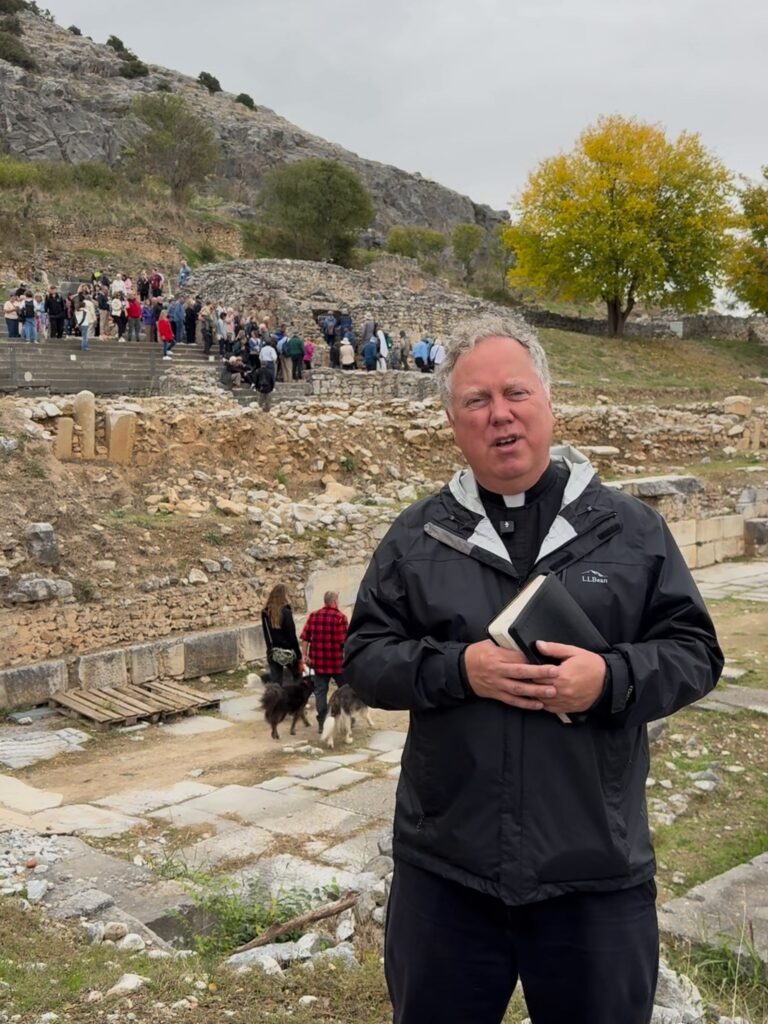
From the Ruins of Philippi
I’m here in Philippi. Behind me is the prison of St. Paul. This is where St. Paul was held as a prisoner during his time here in Philippi. We read about it in Acts chapter 16, and I encourage you to read that chapter.
Philippi was a really important city. It was in what we might call northern Greece, or Macedonia. It was on the east-west Roman highway. It was a Roman colony; it was a Greek city. It was a place of incredible importance. St. Paul came to preach the Gospel here.
He would write a letter to the Philippians, and he wrote that letter from jail. This church of Philippi that he founded had a great place in his heart; it was something he loved very deeply. I encourage you to read his beautiful Letter to the Philippians.
We’re in the footsteps of St. Paul. Those letters that we hear at Mass all the time: they’re real places. And that helps us, I think, to have the Scriptures come alive in a new way, as we want to be disciples of the Lord Jesus, inspired by the great witness of St. Paul.
Earlier the same day, at the river outside the city: Born of Water and the Spirit.